

.png)

A hiring freeze does something strange to a talent team.
It creates time.
And because recruiting people are not generally trained to trust free time, the first instinct is usually panic, followed by administrative tidying, followed by the vague sense that employer brand work should probably wait until hiring comes back.
That is backwards.
A hiring freeze is not the worst time to work on your employer brand.
It is the best time.
Not because employer brand is some nice strategic hobby to keep the team occupied while the requisitions are sleeping. Because this is the only window when you can build the machinery without a dozen urgent reqs dragging every decision back toward short-term patch jobs.
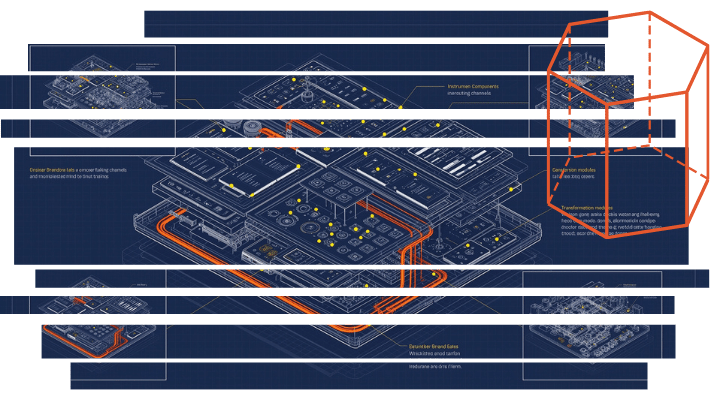
In other words, this is when you get to work on the engine instead of flooring the gas pedal and praying the wheels stay attached.
Why is a hiring freeze the ideal employer brand window?
Because urgency is terrible at strategy.
When the company is actively hiring, every conversation gets bent toward immediate coverage.
Can we fill this role faster?
Can we get more applicants this week?
Can we make the job post less terrible by Thursday?
Can we get the hiring manager to stop freelancing the pitch long enough to close this person?
All real problems.
Also terrible conditions for clear thinking.
A freeze changes that. Suddenly you can ask the questions that actually matter:
What do we want to be known for?
Why would someone choose us over the company saying similar things?
Which roles do we most need to win when hiring returns?
What proof do we have that our story is true?
Where is our current messaging vague, borrowed, or just plain sleepy?
That is strategy work. And a freeze is one of the only times you can do it without a requisition standing in the doorway demanding snacks.
What should TA teams actually build during a hiring freeze?
The work that compounds.
Start with competitive positioning analysis. Figure out what your real talent competitors say, what they prove well, and where they are all blending into the same beige recruiting soup.
Then do EVP development and testing, or if you already have one, pressure-test it. Does it actually say something specific, attractive, different, and real? Or is it just a values poster wearing business casual?
Work on the careers page. This is the moment to rebuild the top of the page, fix the proof, clean up the structure, and stop leading with things candidates do not believe.
Build content infrastructure. Not random posts. Systems. Story formats. Proof libraries. Hiring-manager prompts. Recruiter language. Actual assets people can use when the lights come back on.
And maybe most overlooked of all, do hiring manager preparation. Get alignment now on what makes roles different, what candidates will need to hear, and what proof managers can offer in interviews. It is much easier to prepare managers before the panic returns than while they are already complaining about speed.
Why does this matter so much when hiring resumes?
Because starting from scratch is expensive.
A company that goes completely quiet during a freeze usually tells itself it will “pick things back up” when hiring restarts.
That sounds reasonable until you watch what actually happens.
The pipeline is cold.
The channels are rusty.
The managers need re-education.
The messaging is still generic.
The careers page still says nothing.
The recruiters are back to rebuilding the plane while it is already taxiing.
That delay costs more than most teams account for.
Not just in money. In time. In credibility. In the first wave of roles that should have been easier to fill if anyone had used the downtime like adults.
The teams that come out of a freeze strongest are usually the ones that treated the slow period as build time, not dead time.
How do you get internal buy-in for this?
Do not frame it as brand investment.
Frame it as insurance against the next ramp.
That is the language leadership can hear.
You are not asking to “work on employer brand while things are quiet.” That sounds optional.
You are asking to reduce the cost and delay of restarting hiring.
That is different.
Try it this way:
“If we wait until hiring resumes to rebuild our story, update the careers page, prepare managers, and sharpen our candidate proof, we will lose the first stretch of the ramp to preventable friction. Doing this now is cheaper than restarting cold.”
That is true.
And better yet, it sounds like someone protecting the business, not someone defending a discipline.
That is the whole point.
A hiring freeze feels like inactivity.
But strategically, it is one of the few moments when talent teams can do their best work.
Because the best time to build the thing that makes hiring easier is before hiring starts hurting again.



.jpg)
.jpg)
.jpg)



.png)


